The Benefits of an Agency
This article was recently featured in the .
It is likely not controversial to suggest that systems produce consistent results. The advantage of an educational system, a health care system, or an assembly line, is it produces similar outcomes over time. Confusingly, it is often a source of social/political tension that systems can also, through poor design or bad faith, consistently reproduce negative results, particularly for folks with less power to influence system construction.
At the time I decided to pursue a career as a clinical social worker, I had been working for a number of years as a staff reporter at a community newspaper in a major urban center. I had covered enough election cycles, dips and spikes in violent crime, development projects, school system overhauls etc. to feel like I had a sense of the pros and cons of how most systems function. [When I decided to pursue a career as a psychotherapist,] I imagined a future in private practice, supporting my clients to explore the intricacies of their experience of the world at a comfortable remove from any infrastructure.These days, I am regularly reminded of how system-engaged my work is by a sharp-witted client, whose most innocuous take on my employer, www.av¸£ÀûÓ°ÊÓ Health Network (BHN), involves comparison to Wal-Mart. BHN does provide a wide array of services from, traditional psychotherapeutic and psychiatric supports, to residential; substance use treatment; and medical case management supports, as well as an array of supports for individuals experiencing psychiatric crisis, and much more.
The benefits of a comprehensive community-based support model are strikingly clear from my current role as an outpatient clinician at BHN Carson Center for Development. Our specialty clinic, through a contract with the Springfield-Area Office of the state Department of Developmental Services (DDS), primarily serves intellectually and developmentally disabled adults and children with co-occurring mental health issues.
DDS clients' lives are, by design, deeply and intimately mediated by systems. The model for DDS services is for various vocational, residential, clinical, and other supports to work together to facilitate maximal autonomy and community engagement. Of course, the range of available supports, and flexibility to make changes when something is not working are limited by budgetary, regulatory, and other constraints. The underlying premise of the model, however, is that, to the extent possible, it is beneficial for the individual's support system to be flexible and responsive to their changing needs.
In this context, our work as psychotherapists is often centered on creating space with our clients where they can examine their relationships with their support systems, and determine how they want to manage those relationships to impact the system. Therapeutically, I have found that the possibility for clients of effecting systemic change—even on this micro-level, and through Herculean effort—is at least equally as therapeutic as the other, complementary intervention regularly explored in psychotherapy: The possibility that engaging with chronically misattuned systems can be rendered less traumatic through developing distress-tolerance and self-regulation skills.
This is the crux of why and how community mental health agencies like BHN are so important. Practicing outpatient therapy from within a service-network-system means I can easily provide a referral for an I/DD client who is ready for the challenge of a neurologically integrated therapy group focused on building self-regulation skills. I can join with a client, at their direction, to coordinate with group home residential supports on how best to support them as they develop a clearer self-understanding of their own reactions and motivations.
Writ large, my best hope is that, as a society, we are moving toward systems that harness increased information flows to provide increasingly flexible and accurate responses to people's needs. State agencies like DDS and community mental health agencies like BHN are and should continue to demonstrate leadership in this direction.
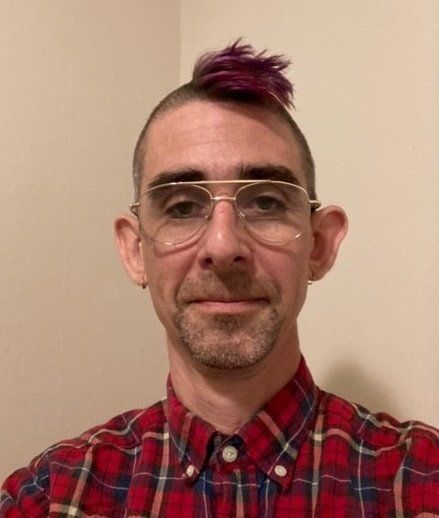
David Taber, MSW, LCSW gave up on his dream of being a newspaper reporter years ago due to poor organizational and time management skills. He remains committed, however, to borderline comical remuneration, and so has since pursued a career in community mental health. He really should have gotten it together to sit for his LICSW exam by now.
SHARE
Topics
Stay Up to Date!
Sign-up for our newsletter to receive news and updates from BHN.